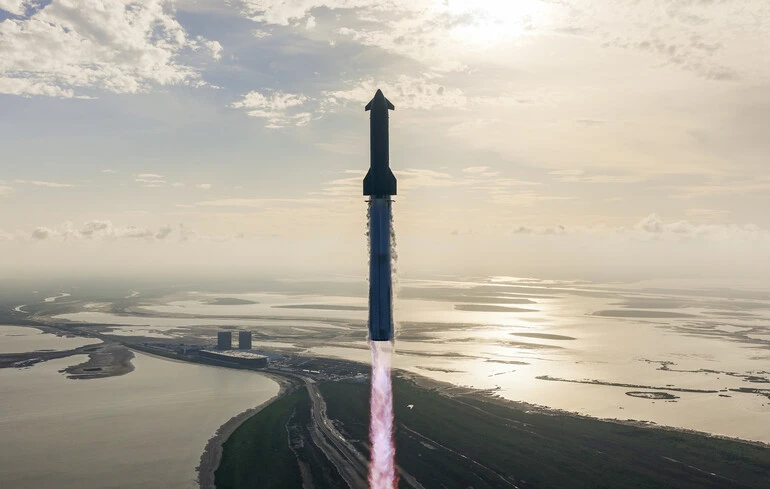
SpaceX is preparing to launch the first full-scale orbital flight of the Starship launch vehicle, which will mark an important milestone in the development of space technology. This launch will follow 13 previous tests and aims to reach orbit, which is crucial for the rocket’s reusability in future missions to the Moon and Mars.
The launch is scheduled for Monday, September 28, at 3:48 p.m. Kyiv time from the Starbase launch site in Texas. In the event of adverse weather conditions or technical delays, the launch may be postponed to 4:30 p.m. The live broadcast has already begun, allowing anyone interested to watch this important moment.
The Starship rocket is approximately 124 meters tall and consists of an upper stage—the Starship spacecraft—and the Super Heavy booster, equipped with 33 engines. Both stages are designed to be reusable, and in the future, SpaceX plans to use mechanical grippers to recover them on the launch pad.
During the flight, the Super Heavy will operate for about two minutes before separating, and the Starship will complete its main acceleration phase in just over eight minutes. The spacecraft is scheduled to complete six orbits around Earth and deploy 26 next-generation Starlink satellites, which will remain in SpaceX’s orbital constellation.
After completing the mission, Starship will perform a braking maneuver and begin a controlled return to Earth. In a previous test flight, the rocket successfully reignited its engine in flight, but the Super Heavy booster fell into the water due to problems with the engine reignition.
Read also:
- Ukrainian Armed Forces Strikes on Russia May Help Resume Peace Talks — U.S. Ambassador
- International Diplomacy and Military Strategy: How Trump’s Decisions Will Affect Ukraine
- How international sanctions could change the course of the war: Zelenskyy’s appeal to the U.S. and new challenges for Ukraine