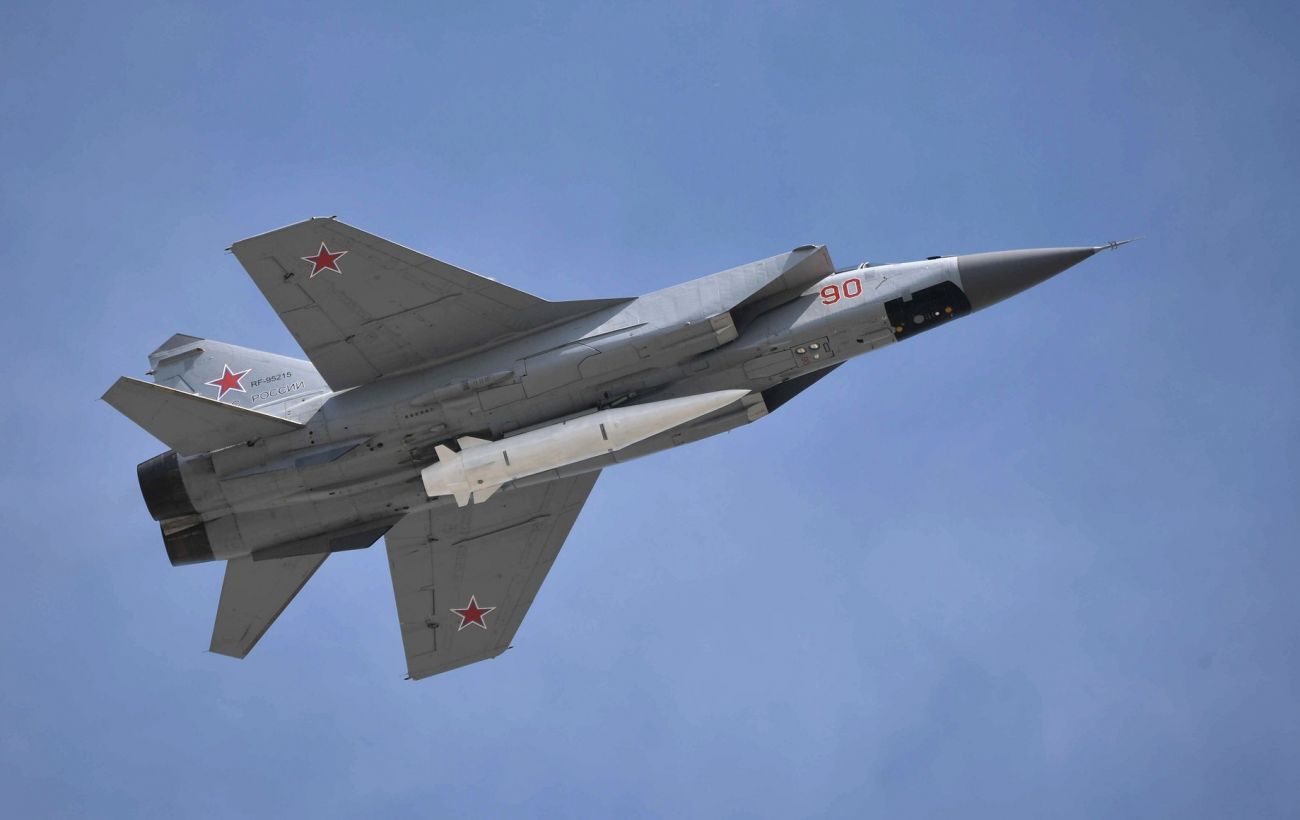
According to Skibitsky, the rocket fuel is now being used for other ballistic missiles instead of the "Kinzhal" missiles. In addition, production and deployment of the Kh-32, a modernized version of the Kh-22, have also been suspended. Resources and components previously allocated for these missiles are being redirected to other types considered more effective.
The Main Intelligence Directorate has been observing these trends since April 2026. As Skibitsky explained, the enemy attempted to improve the accuracy of the X-32, but several combat tests proved unsuccessful. That is why the Russians decided to send them back for further development and suspended plans for mass production.
Problems with the “Kinzhal”
“Similar problems arise with the ‘Kinzhal’ missiles.” It’s hard to recall a single instance where this missile hit the target precisely. For a missile to be effective, the deviation from the target should not exceed 5–7 meters, whereas theirs is over 30 meters,” emphasized the deputy chief of the Main Intelligence Directorate.
Redistribution of Resources
He also added that the enemy is focusing on the production of certain weapons, to which resources are being redirected. “This makes sense: if certain types of missiles are hitting their targets, their production increases. In addition, the emphasis is on producing weapons for which they have the necessary components,” explained Skibitsky.