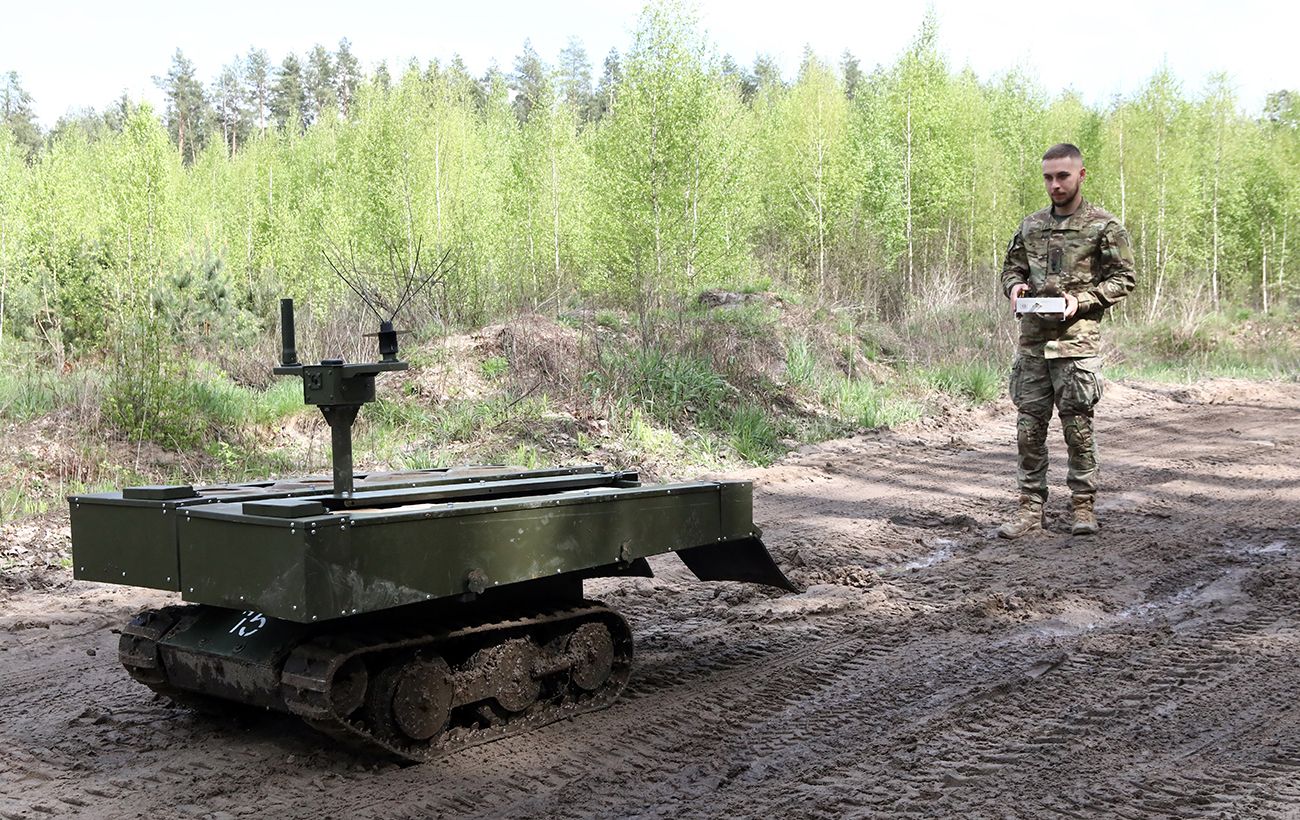
Western countries have not yet fully grasped the significance of ground-based robotic systems (GRS) in military conflicts. This situation will change when they face protracted hostilities, a widespread threat from FPV drones, and significant casualties. This view is expressed by RBC-Ukraine, citing the article “Machines Instead of People: Have RTS Become More Effective Than Armored Vehicles in Logistics and Evacuation?”
Delay in UAV Adoption in the West
Oleg Fedoryshyn of DevDroid notes that the West has not yet experienced the shift in perception of combat operations that the Ukrainian army has already undergone. Although Western partners are showing interest in ground robots, a true understanding of their critical role will only come after the first large-scale ground operation. Typically, attitudes toward new technologies change only after direct confrontation with a problem on the battlefield.
The Example of Interceptor Drones
Fedoryshyn cites the example of interceptor drones: interest in them grew significantly when it became clear that expensive air defense missiles were insufficient for shooting down cheap, mass-produced targets. A similar situation may await unmanned aerial systems (UAS). Western countries will begin to deploy robotic systems on a large scale when they face challenges such as:
- prolonged ground operations;
- the constant threat of FPV drones;
- significant personnel losses.