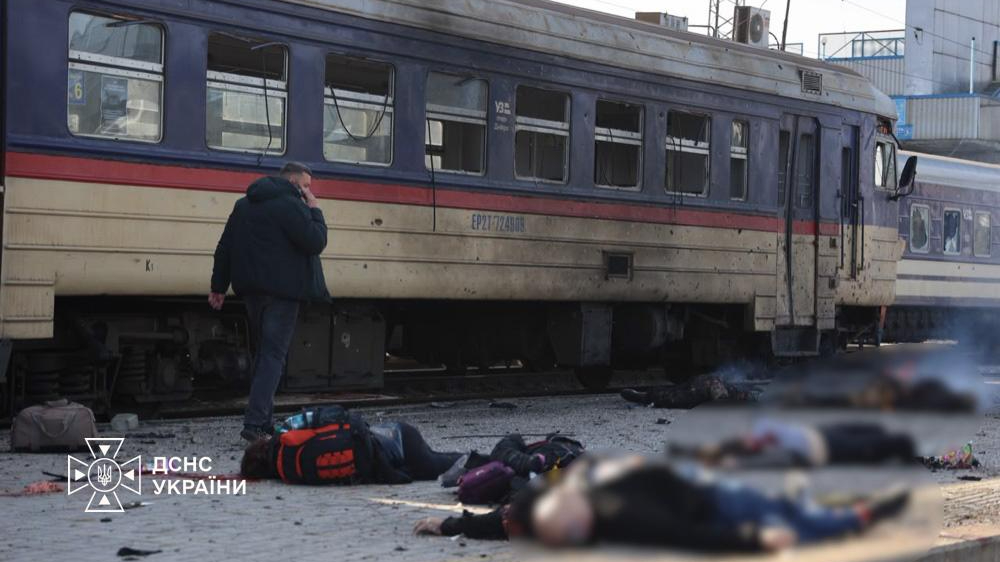
On October 30, 2026, Ukraine once again witnessed a horrific tragedy: 15 people, including a child, were killed as a result of a Russian strike on the train station in Dnipro. This attack, which took place on October 29 when a jet-powered drone struck the platform, shocked local residents and everyone following the war in Ukraine. According to Oleksandr Ganzha, head of the Dnipropetrovsk Regional State Administration, six of the injured are in critical condition, including an 11-year-old boy. The attack on the station, where the “Dnipro–Zaporizhzhia” train was parked at the time, was yet another example of the ruthless tactics employed by Russian forces, which are deliberately attempting to destroy civilian infrastructure.
This incident is not an isolated one—it merely confirms an alarming trend that has been observed in Ukraine since the start of the war. Attacks on civilian targets, such as schools, hospitals, and transportation hubs, have become part of a military strategy aimed at sowing fear and destabilizing society. In the case of Dnipro, the deaths of civilians, including children, underscore the brutality of the war and its impact on the lives of Ukrainians.
Tragic Consequences: The Attack on the Dnipro Train Station
As a result of a drone strike on the train station in Dnipro, the death toll has risen to 15. Among them is a 40-year-old man who died in the hospital from severe injuries, despite the efforts of medical staff. This incident served as a shocking reminder of the cost of war, which spares no one, regardless of age or gender. Doctors continue to treat 11 injured people, six of whom are in critical condition. Such news resonates deeply with the public, as behind every number are real people and their families who have suffered irreparable losses.
Local residents who witnessed the attack describe an atmosphere of panic and fear. “I heard a loud explosion, and everything around me shook. It’s hard to believe that this happened right here, where we live,” says one eyewitness. Rescue workers who arrived at the scene also note that the situation was critical, and every minute counted. This tragedy has not only left a mark on people’s hearts but has also become part of a larger context—the ongoing attacks on civilian targets in Ukraine.
📌 Read also:
A Snapshot of the War: The Frequency and Scale of Attacks on Civilian Targets
Since the start of Russia’s full-scale aggression in Ukraine, attacks on civilian infrastructure have become systematic. According to monitoring groups, dozens of attacks on hospitals, schools, residential buildings, and transportation hubs are recorded every week. In recent months alone, the number of civilian casualties has risen to the thousands. In this context, the attack on Dnipro appears to be part of a broader strategy aimed at destabilizing the country.
The statistics speak for themselves: in 2026, Russia carried out more than 1,500 attacks on civilian targets, of which about 300 resulted in the deaths of civilians. In particular, Dnipro, Kyiv, and Kharkiv have become the epicenters of these horrific events. These figures indicate that Russian forces are deliberately attempting to paralyze the lives of Ukrainians by striking at their most vulnerable points.
This approach to waging war has sparked widespread outrage in the international community. Many countries have condemned Russia’s actions, but the practical consequences remain limited. Amid numerous attacks, many Ukrainians still believe in victory and are trying to resume their peaceful lives despite constant threats. However, with each new strike, their faith in a return to normal life grows weaker.
Thus, the attack on the train station in Dnipro is not just another tragic incident, but part of a larger picture that reflects the brutality of the ongoing war in Ukraine. It underscores just how far the aggressors are willing to go to achieve their goals, and how this affects the lives of thousands of people.
Social Consequences: How the War Affects Civilians
The war in Ukraine is leaving a deep mark on the minds of civilians. According to sociological studies, about 70% of Ukrainians report constant stress and anxiety due to the threat of new attacks. These psychological consequences are particularly pronounced in children, who lose their sense of security in wartime. Children who have witnessed attacks experience fear that can last for many years and, in some cases, even lead to the development of post-traumatic stress disorder.
In addition, the loss of loved ones and friends, as well as the destruction of homes, forces people to reevaluate their values and priorities. Many Ukrainians who have survived attacks are becoming actively involved in volunteer work, helping others to find meaning in difficult circumstances. This demonstrates how war is shaping a new social consciousness, in which mutual aid and support have become integral parts of daily life.
At the same time, in the face of constant threat, Ukrainians are demonstrating great resilience. Studies show that despite the tragedies they are experiencing, 85% of the population believes their country is capable of overcoming these difficulties. This shift in consciousness and the willingness to resist are becoming key factors in shaping national identity. Many people are choosing to stay in Ukraine, even if it means taking risks, and are continuing to build their lives amid the war.
🔎 Trending:
International reaction: How the world is responding to Russian aggression
The international community is actively responding to Russian attacks, particularly targeted strikes on civilian facilities. Following the attack on the train station in Dnipro, a number of countries, including the U.S., the U.K., and Germany, issued strong condemnations of Russia’s actions. This has led to a new wave of sanctions aimed at isolating Russia on the international stage and limiting its economic capabilities.
In addition to sanctions, the international community is also stepping up humanitarian aid to Ukraine. In particular, international organizations and governments are providing funds, medicine, and food to support those affected by the war. The latest data shows that the volume of humanitarian aid has increased by 25% compared to the previous year, underscoring other countries’ solidarity with the Ukrainian people.
An important component of the international response is support for military aid to Ukraine. NATO countries continue to provide Ukraine with weapons and military equipment to help in the fight against aggression. According to the latest reports, the volume of military aid has risen to record levels, enabling Ukraine to strengthen its defense capabilities.
However, despite numerous statements of support, many experts believe that the international response remains insufficient. Some countries remain cautious about supplying heavy equipment and ammunition, fearing an escalation of the conflict. This caution is causing concern among Ukrainians, who believe that the world cannot stand idly by when their survival is at stake.
Thus, the international response to Russian aggression in Ukraine is complex and multifaceted. It includes both support and restrictions that could affect the duration of the war and its consequences for the civilian population.
What does all this mean? Tragedies such as the attack on the train station in Dnipro underscore the ruthlessness of war and its devastating impact on people’s lives. War not only takes lives but also shapes a new social reality, where resilience and mutual aid become the foundation for survival. The international community, while responding to the aggression, must realize that true support for Ukraine lies not only in words but also in actions that can change the course of the conflict. Only then is there hope for the restoration of peace and stability in the region.

