Introduction, Global Context, and Background of the Issue
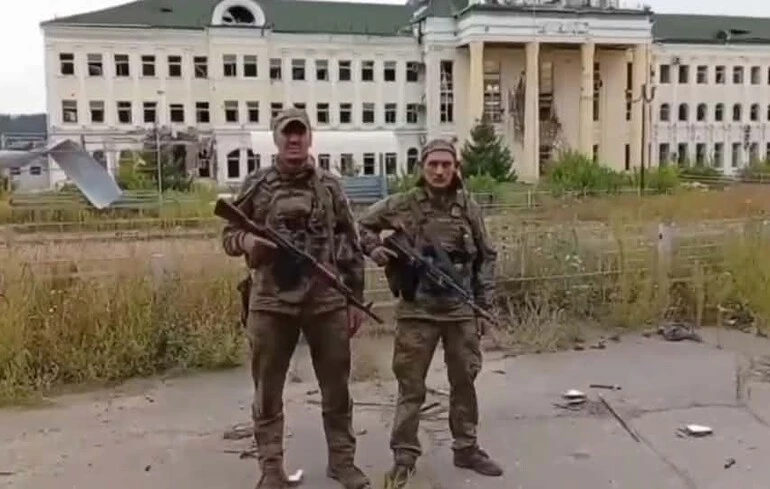
Russia’s attacks on Ukraine, which began in 2014, became not only a local armed conflict but also led to global geopolitical tensions. The military operations, which later escalated into large-scale shelling of Ukrainian cities—particularly the capital, Kyiv—forced the international community to reevaluate its approach to security in Europe. In this context, it is important to examine how the humanitarian situation in Ukraine is evolving, as well as the implications of the ongoing aggression for global politics.
Since the start of hostilities, Russia’s aggression has been characterized not only by traditional methods of warfare but also by new forms, such as cyberattacks, disinformation campaigns, and the use of private military companies. This experience is becoming a subject of study for analysts around the world. In recent years, especially since the start of the full-scale invasion in February 2022, the situation in Ukraine has become the epicenter of global news.
It is important to note that the international community, including NATO, the European Union, and other organizations, is actively responding to these events. However, despite numerous sanctions and support for Ukraine, direct military operations continue, raising concerns about a possible escalation of the conflict.
Chronology of Events, Key Players, and Documented Facts
Chronology of events
- 2014: Russia’s annexation of Crimea and the start of the armed conflict in Donbas.
- 2015: Signing of the Minsk Agreements, which were intended to halt military operations but failed to bring peace.
- 2021: Tensions rise along the Ukrainian border; Russian troops build up.
- February 24, 2022: Russia launches a full-scale invasion of Ukraine, shelling cities, including Kyiv, Kharkiv, and others.
- March 2022: Numerous humanitarian disasters, millions of refugees, and the destruction of infrastructure.
- 2023: Continued shelling and new threats, including the use of cutting-edge warfare technologies.
Key Figures
- Vladimir Putin: President of Russia, the instigator of the aggression against Ukraine.
- Volodymyr Zelenskyy: President of Ukraine, who has led the fight against Russian aggression.
- António Guterres: UN Secretary-General, calling for peace and humanitarian aid.
- Western leaders: Including U.S. President Joe Biden, German Chancellor Olaf Scholz, and others who support Ukraine in its fight against aggression.
Documented Facts
- According to the UN, approximately 8 million Ukrainians have become internally displaced persons.
- The International Organization for Migration (IOM) reports that more than 6 million refugees have fled Ukraine.
- According to Human Rights Watch, numerous human rights violations have occurred during the war, including executions, rapes, and other crimes.
📌 Read more on this topic:
Analysis of Hidden Motives, Conflicts of Interest, and Subtle Pitfalls
When analyzing the situation in Ukraine, it is important to consider not only the military aggression but also the hidden motives behind Russia’s actions.
“This war is not just a struggle for territory; it is a war for influence, ideology, and geopolitical interests,” notes international relations expert Oleksandr Levchenko.
Conflicts of interest in this situation manifest themselves on several levels. First, Russia is attempting to restore its sphere of influence in the post-Soviet space, and second, it is using military action as a tool to divert attention from domestic problems, such as the economic crisis and social protests. Many analysts believe that the aggression against Ukraine reflects a deep political crisis within Russia.
In addition, the reaction of the international community is a key factor. Western countries, on the one hand, are providing Ukraine with military and humanitarian aid, but on the other hand, they may have an interest in maintaining the status quo to avoid an escalation of the conflict. This raises questions about how willing these countries are to take risks to support Ukraine and what compromises they might be willing to accept in the future.
Thus, Russia’s attacks on Ukraine are a complex issue that requires a detailed analysis not only of military actions but also of the political, humanitarian, and social aspects that interact in this context. It is important to continue monitoring the situation and seeking ways to achieve a peaceful resolution of the conflict, as the consequences of the war are felt not only in Ukraine but across the entire globe.
Assessments by independent analysts and specific consequences for Ukraine and its citizens
Assessments by independent analysts regarding the consequences of Russia’s attacks on Ukraine vary, but most agree that the war will have long-lasting, profound, and negative consequences for Ukrainian society. According to a study conducted by the Ukrainian Institute of the Future, over 70% of Ukrainians believe that the country needs urgent reforms in both the economy and politics.
The war has led to significant economic losses. According to the World Bank, Ukraine’s GDP fell by 30% in 2022, and forecasts for 2023 indicate that the economy could contract by another 10%. This is due not only to the destruction of infrastructure but also to the exodus of millions of people who have left the country in search of safety and better living conditions. As a result, the labor market has undergone serious changes: unemployment has risen to record levels, and competition for jobs has intensified.
Experts point out that the war has also affected the social structure of society. Psychological trauma resulting from the hostilities has become a widespread problem. According to the Ukrainian Ministry of Health, more than 60% of the population experiences stress or anxiety related to the war. This has led to a surge in demand for psychological assistance, which is often inaccessible to many Ukrainians.
Some analysts, such as Vadym Denysenko, emphasize that rising inflation—which exceeded 20% in 2023—is another consequence of the war. Food and energy prices have risen, making life significantly more difficult for citizens. As a result, the poverty rate in Ukraine is rising, and this is not only an economic problem but also a social one.
Overall, independent analysts point out that without active international support, Ukraine may face even greater challenges in the future. It is important that the country receive not only humanitarian but also economic aid for recovery and development. Otherwise, the consequences of the war could drag on for many years, causing profound social and economic disruption.
International Reaction, Geopolitical Consequences, and the Stance of Allies and Opponents
The international response to Russia’s aggression against Ukraine was quite swift and decisive. Western countries—including the United States, EU member states, and NATO—condemned the Kremlin’s actions and imposed numerous sanctions against Russia.
“We will support Ukraine for as long as it takes, and we will not allow Russia to destroy its sovereignty,”
said U.S. Secretary of State Antony Blinken.
The sanctions imposed on Russia were intended to limit its economic activity and military capabilities. According to experts, the Russian economy contracted by 5% in 2022 as a result of international isolation. However, analysts believe these restrictions may have only a short-term effect unless the international community continues to put pressure on the Kremlin.
NATO countries have also strengthened their military presence on the eastern flank, particularly in the Baltic states and Poland, as a show of support for Ukraine and a deterrent against Russia.
“We are ready to defend every centimeter of NATO territory,”
said NATO Secretary General Jens Stoltenberg.
However, not all countries unequivocally support Ukraine. Some nations, notably China and India, are taking a cautious stance, attempting to remain neutral in the conflict. China, in particular, emphasizes the importance of dialogue and negotiations, yet actively supports Russia economically, a fact that raises concerns among Western experts.
Overall, international support for Ukraine remains critically important for its survival and recovery. Looking ahead, depending on how events unfold, the global geopolitical situation may undergo significant changes, and Ukraine’s role in these changes will become even more important.
🔎 You might also be interested in:
Future Scenarios and Editorial Conclusions
Optimistic scenario
In the optimistic scenario, the international community continues to actively support Ukraine, providing not only humanitarian but also economic aid. Military hostilities gradually subside, and a dialogue between Ukraine and Russia leads to a peaceful resolution of the conflict. As a result, Ukraine’s economy begins to recover, and citizens’ standard of living improves. The strengthening of democratic institutions and the implementation of reforms enable Ukraine to become a stable and prosperous country in Europe.
Base Case Scenario
In the baseline scenario, the conflict drags on, but international support remains steady. Ukraine continues to fight for its independence, though without significant shifts in military operations. Economic problems persist, but the country begins to gradually recover thanks to foreign aid. Social challenges, such as the population’s mental health, require special attention, but there is hope for positive change in the long term.
Crisis Scenario
In the crisis scenario, the war continues unabated, and international support begins to wane. Ukraine’s economy suffers serious losses, and poverty levels rise. Society becomes increasingly polarized, and social conflicts intensify. As a result, the country may find itself on the brink of collapse, requiring urgent intervention by international organizations to stabilize the situation.
The editorial board’s conclusions indicate that Ukraine’s future depends not only on domestic reforms but also on international support and the global community’s willingness to act decisively. Only through joint efforts is it possible to achieve stability and security for Ukraine in the face of today’s challenges.