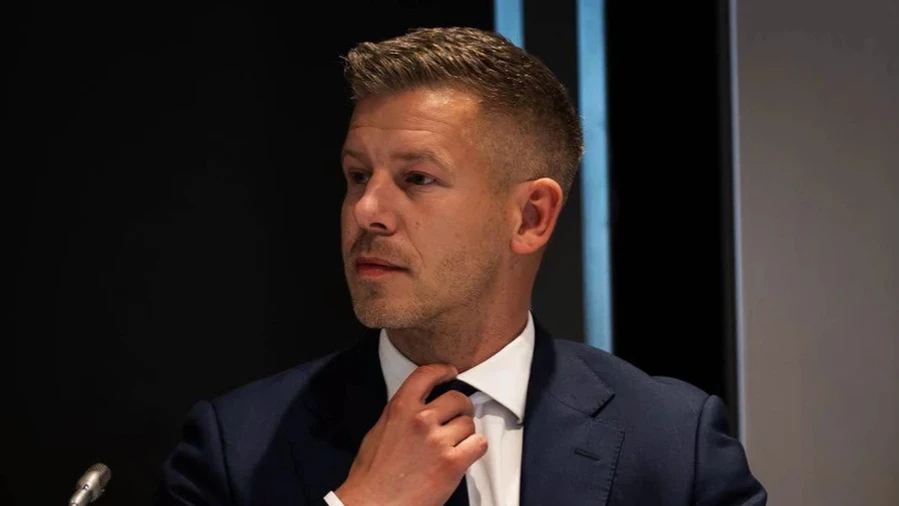
On October 2, 2026, Hungarian Prime Minister Péter Magyar announced the passage of a bill that strengthens the rights of the Hungarian community to receive education in the Hungarian language in Ukraine. This move sparked lively debate not only in Ukraine but also beyond its borders, as the issue of language policy remains one of the most sensitive in the context of interethnic relations and the integration of national minorities. The Hungarian minority in Ukraine, in particular, is striving to preserve its cultural identity and language amid globalization and a changing sociopolitical context.
The bill, which Magyar supported, provides for expanding opportunities for Hungarian schools in Ukraine, particularly in Transcarpathia, where a significant portion of the Hungarian population resides. It is important to note that this document not only concerns the educational sphere but also has a potential impact on political relations between Ukraine and Hungary. Support for the Hungarian community from the Hungarian government may help strengthen cultural ties, but it may also raise concerns within Ukrainian society about possible separatist tendencies.
This bill is part of a broader discussion on language policy in Ukraine, which has undergone significant changes in recent years. Since the Revolution of Dignity in 2014, Ukrainian authorities have actively promoted a policy of Ukrainization, which has caused some tension in relations with national minorities, particularly the Russian- and Hungarian-speaking communities. According to data from the State Statistics Service, Ukrainians who identify as Hungarians make up about 0.3% of the country’s population, but their cultural and linguistic identity is of great importance to the region.
The Significance of the Bill on Education in the Languages of National Minorities
The approved bill provides the Hungarian community in Ukraine with the opportunity to receive an education in their native language, which is an important step toward strengthening their rights. This decision could have a positive impact on the quality of education in Hungarian schools, as instruction in one’s native language promotes better learning and the development of cultural identity. However, the implementation of the law will depend on many factors, including the political will of the Ukrainian authorities and their willingness to engage in dialogue with national minorities.
On the one hand, these legislative changes could strengthen the position of Hungarians in Ukraine, but on the other hand, they could provoke a negative reaction from those who believe that such a policy threatens national unity. In this context, it is worth noting that language policy in Ukraine has long been a subject of controversy. For example, the law on ensuring the functioning of the Ukrainian language as the state language, adopted in 2019, sparked mass protests among Russian-speaking communities.
Madyar’s bill could also become an important element in regional negotiations between Ukraine and Hungary. In recent years, both countries have been trying to mend relations, which had been strained due to issues surrounding the autonomy of Hungarians in Ukraine and their rights. It is important that this bill not become a tool for political manipulation, but rather genuinely contribute to the development of culture and education within the Hungarian community.
📌 Read also:
The Context of Language Policy in Ukraine: A Historical Perspective
Ukraine’s language policy has a complex history spanning decades. Since gaining independence in 1991, the country has sought to strike a balance between ensuring the rights of national minorities and strengthening the Ukrainian language as the state language. Throughout the 1990s and early 2000s, many national minorities, particularly Hungarians, were able to use their languages in educational and cultural institutions.
However, the situation changed after 2014, when Ukraine faced new challenges related to Russia’s aggression and the conflict in the east of the country. Amid the war, state policy became more focused on strengthening national identity, which led to stricter requirements for the use of the Ukrainian language. This, in turn, caused concern among national minorities, who felt that their rights might be infringed upon.
Among the key measures taken as part of language policy is the 2017 Education Act, which restricted the use of national minority languages in the educational process. This law caused a significant stir in society, particularly in Hungary, where concerns were raised about a potential threat to the cultural identity of Hungarians in Ukraine. According to this law, starting in 2020, instruction in educational institutions for national minorities must be conducted primarily in Ukrainian.
Thus, the issue of language policy in Ukraine remains highly relevant. On the one hand, the official language is an important element of national identity; on the other hand, it is necessary to ensure the rights of national minorities to prevent social tensions and conflicts. The government’s stance on language policy and legislative changes could significantly impact interethnic relations and the integration of minorities into society.
Impact on Interethnic Relations in Ukraine
With the passage of a bill expanding the rights of the Hungarian community to receive education in their native language, interethnic relations in Ukraine may undergo significant changes. On the one hand, Hungarians will have the opportunity to better preserve their cultural identity; on the other hand, this could lead to new tensions between the Ukrainian and Hungarian communities. Amid an ongoing struggle for national identity in Ukraine, such legislative changes could be perceived as a threat to the country’s unity.
An important point is that the Hungarian minority in Ukraine is not homogeneous. There are differing views among Hungarians regarding language policy and integration. Part of the community supports the idea of Ukrainian identity, while another part sees education in their native language as a way to preserve their cultural heritage. This divergence of views could lead to internal conflicts, which in turn would affect the overall state of interethnic relations in the region.
Currently, Hungary actively supports its compatriots abroad, particularly in Ukraine. Prime Minister Péter Magyar emphasizes that the Hungarian government will continue to defend the rights of the Hungarian community. This could be perceived as external interference in Ukrainian affairs, causing concern among some segments of Ukrainian society. It is important that this support does not become a tool for political pressure, as this could exacerbate the already complex relations between the two countries.
In addition, language policy could serve as a catalyst for the formation of new alliances in the region. The Hungarian minority could become an important factor in relations not only with Hungary but also with other neighboring countries where Hungarians live, such as Romania and Slovakia. This could intensify competition among states for influence over national minorities in Ukraine, which, in turn, could lead to new challenges in Ukraine’s foreign policy.
🔎 Related:
Prospects for the Integration of National Minorities
The adoption of the bill on Hungarian-language education in Ukraine opens up new opportunities for the integration of national minorities. On the one hand, this could help improve educational outcomes and enhance the quality of life for the Hungarian community. On the other hand, a key question is how effectively this law will be implemented in practice. The integration of national minorities into Ukrainian society requires not only legislative changes but also active dialogue between communities.
According to recent surveys, more than 60% of Hungarians in Ukraine believe that their rights are not fully respected. This indicates that even with the adoption of the new law, much work remains to be done to improve the situation. Integration processes can only be successful when national minorities feel like they are part of society rather than isolated groups.
Given the current situation, it is important to recognize that the integration of national minorities is a complex process. It requires not only educational reforms but also cultural initiatives that would foster mutual understanding among different ethnic groups. For example, exchange programs between Ukrainian and Hungarian schools could be an important step in this direction. Such programs can help young people on both sides better understand each other’s culture and language.
It is also necessary to consider the economic aspects of integration. Access to education in their native language can stimulate business development among the Hungarian population, which, in turn, will have a positive impact on the region’s economic stability. The integration of national minorities, therefore, can become not only a cultural but also an economic factor in development.
Overall, the adoption of a bill on Hungarian-language education in Ukraine could be an important step toward improving relations between the Hungarian minority and Ukrainian society. However, to achieve successful integration, the needs and interests of all parties must be taken into account. This requires efforts not only on the part of the state but also the active participation of the minorities themselves in the processes that directly affect them.
What does all this mean? The adoption of the law on Hungarian-language education could be an important step toward strengthening the rights of national minorities in Ukraine, but at the same time, it poses new challenges for interethnic relations. The effective integration of the Hungarian community into Ukrainian society will require efforts from both sides, as well as a willingness to engage in dialogue and cooperation. How these new opportunities are implemented will determine not only the future of the Hungarian minority but also the stability of the region as a whole.