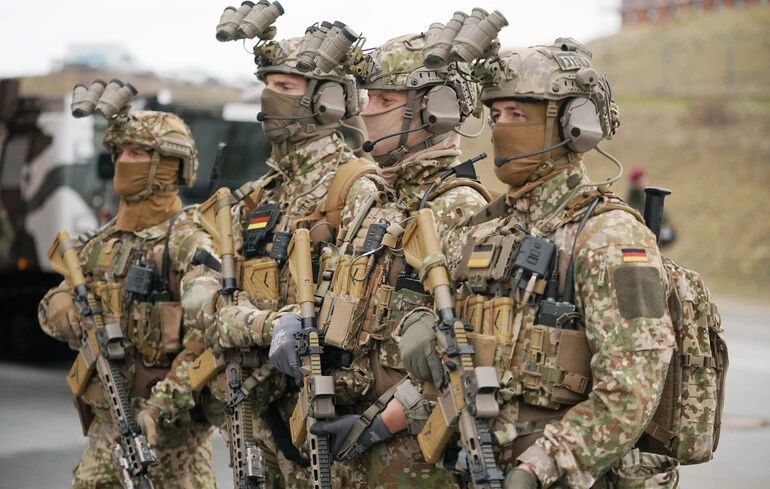
Germany's Special Operations Command (KSK) is changing its training program for its troops in light of the potential threat of war with Russia. According to Bild, KSK Commander Brigadier General Andreas Kühne noted that previously, special forces operatives carried out missions over a three-day period before returning to base, but they are now being trained for longer stays in the field.
Since its creation in 1996, the KSK has carried out the most complex military missions, including hostage rescues, the pursuit of terrorists, and the evacuation of people from dangerous regions. Soldiers from this unit have also participated in combat operations in Afghanistan. Kühne emphasized that the new adversary they will have to face is located in the east, and the unit is focused on preparing for a confrontation with Russia.
The KSK commander noted that previously, troops planned operations lasting three days, after which they would return to camp to rest. In the event of a war with Russia, however, such conditions will not be available, and special forces will have to remain in the field for much longer—possibly continuously. They are also training to carry out missions in extreme cold and to counter modern weapons systems, such as tanks and drones.
Küne also noted that German special forces demonstrated their capabilities during military exercises in the Baltic states, emphasizing that Moscow must realize that Russia would suffer significant losses in the event of an attack on NATO. He stressed the need for the cost to Moscow to be high enough to make it think twice before attacking.
The Bundeswehr selects only the best soldiers for the KSK, and only slightly more than 15% of candidates pass the selection process. The special forces unit is based at the Zeppelin Barracks in Calw, near Stuttgart, and has a strength of about 1,500 personnel, only a third of whom are combatants. Küne noted that the KSK is currently 70–80% staffed and believes that the introduction of a new conscription-based military service could attract more people to the unit.

