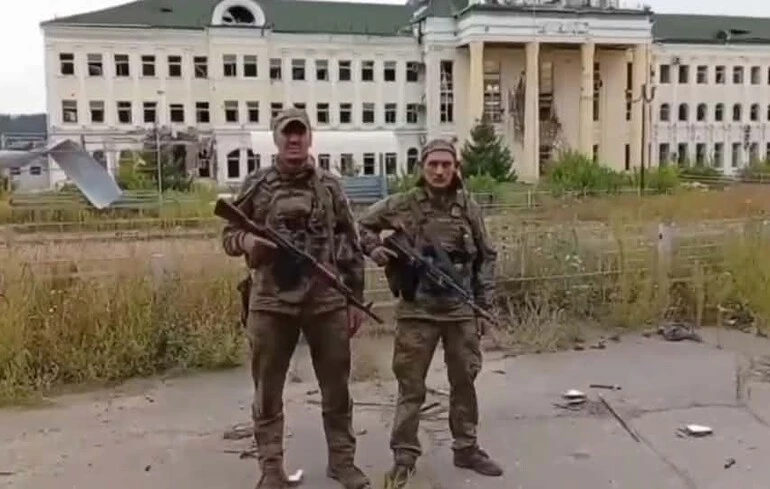
On September 19, 2026, in the occupied territories of the Kherson region, Russia held yet another sham election to the State Duma, which marked another stage in its political manipulation. During these elections, the occupiers are using staged polling stations, handing out gifts, and organizing festive events in an attempt to create the illusion of legitimacy.
This situation is causing serious concern among the local population, which finds itself under conditions of coercion and intimidation. Elections held in an atmosphere of pressure and fear threaten the fundamental rights of citizens who are trying to preserve their dignity and freedom of choice. What are the real consequences of these sham elections for human rights in the occupied territories, and how will this affect the international community? These are the key questions we will try to answer in our investigation.
Lemonade and Dominoes: How the Occupiers Sugarcoat Reality
The sham elections in the Kherson region are characterized by massive propaganda and active manipulation by the Russian military and civilian administrations. The occupiers set up colorful polling stations decorated with Russian national symbols, hand out sweets and drinks, and even organize entertainment events to create the impression of a festive occasion. At the same time, these actions are part of a system of intimidation, as local residents are under pressure from the occupiers, who control the voting process.
According to local journalists, the number of observers at polling stations is limited, and oversight of the electoral process is carried out exclusively by representatives of the occupying administration. In addition, the latest technologies, such as electronic voting, are actively used during the elections, raising doubts about their transparency and legitimacy. Many residents note that even if they want to vote, they are unable to do so freely because their votes are being controlled.
Local residents’ reactions to these sham elections are mixed. Some try to avoid participating in the vote, realizing that the outcome is predetermined, while others, driven by fear, still try to vote, hoping for change. Local activists are trying to raise human rights issues and protest against the occupation, but their activities are subject to persecution by the occupying authorities. As one activist notes: “We cannot remain silent, but every step we take is under threat. This is not an election—it’s a farce.”
The Illusion of Choice: Do People Have True Freedom of Vote?
An analysis of the conditions under which these sham elections are held shows that the local population has no real freedom of choice. The occupying forces actively intimidate people and conduct searches to identify those attempting to organize resistance. According to human rights organizations, in some cases, people are arrested or forced to cooperate for refusing to vote or for criticizing the sham elections.
- The occupiers are using intimidation tactics to convince people to vote for their candidates.
- Polling stations are controlled by military personnel who monitor voters’ behavior.
- Local residents report instances of vote rigging and manipulation of election results.
This pressure is accompanied by the active use of propaganda claiming that participating in the elections is every citizen’s duty. However, most people realize that their votes have no significance in a situation where the results are already predetermined. As one expert notes:
“These sham elections are nothing more than a tool to legitimize the Russian occupation. They have nothing to do with democracy.”
Thus, the sham elections in the occupied territories of Ukraine have become a symbol of the absence of freedom and democracy. Local residents caught up in this catastrophic situation are forced to fight not only for their right to vote, but also for their very right to exist amid constant fear and pressure.
📌 Read also:
Who stands to gain from this farce? The Kremlin’s economic and political motives
The reasons why Russia is holding these elections are complex and multifaceted. First, the Kremlin is attempting to legitimize its authority in the occupied territories by creating the illusion of support from the local population. Second, these sham elections allow Russia to strengthen its control over the region’s economic resources, which is strategically important for the further development of its aggressive policy.
In addition, the sham elections serve as a way to divert the international community’s attention from the real problems arising from the war, such as the humanitarian crisis and human rights violations. Through such manipulations, the Kremlin is attempting to convince the world that the situation in the region is stable, which, in turn, allows it to avoid serious sanctions and international pressure.
The economic benefits of sham elections are also significant. The occupying administration is trying to establish a new economic structure that allows it to control the flow of goods and resources. This is particularly important for maintaining economic stability amid the sanctions imposed on Russia. As one economist notes:
“Russia is using these elections as a tool to legitimize its economic interests in Ukraine, as well as to strengthen its position on the international stage.”
Thus, the sham elections in Ukraine are not merely a political spectacle but a complex mechanism of manipulation aimed at strengthening the Kremlin’s power and control over the occupied territories. This farce is yet another example of how far aggression can go in the name of political and economic goals.
Elections Against the Backdrop of a Humanitarian Catastrophe: The Reality of Life in the Occupied Territories
Against the backdrop of the sham elections being held by Russia in the Kherson region, the humanitarian situation continues to deteriorate. Caught in the midst of war, local residents face numerous challenges: from food and medical shortages to human rights violations. The occupying authorities are using these elections to legitimize their actions, but the reality of life in these territories is quite different.
Problems with access to basic necessities, such as water, electricity, and medical care, have reached a critical level. Many people have been left without essential resources due to blockades and economic sanctions imposed on Russia. According to the UN, over 60% of the population of the Kherson region is in need of humanitarian aid. Under such conditions, holding elections seems not only absurd but also cynical. The occupying administration not only ignores the needs of local residents but also actively manipulates their minds in an attempt to create the illusion of stability.
Furthermore, numerous cases of human rights violations in the occupied territories have become commonplace. People who express dissatisfaction or criticize the Russian administration are subjected to arrest, torture, and other forms of pressure. Amid an atmosphere of fear and repression, the local population is forced to participate in sham elections without any real choice. As a human rights activist notes:
“The Russian authorities use elections as a tool to suppress any opposition and control public opinion in the occupied territories.”
Thus, sham elections not only undermine democratic principles but also become yet another link in the chain of human rights violations in these territories.
The International Community: How Are Allies Responding to Russian Manipulations?
The international community continues to respond to Russia’s actions in Ukraine, particularly the holding of sham elections in the occupied territories. Ukraine’s key allies, such as the U.S. and EU countries, condemn these elections, deeming them illegitimate. They emphasize that holding such elections constitutes a violation of international law and Ukraine’s sovereignty.
The United States, in particular, has announced new sanctions against Russian officials and companies that support the occupation administration. These sanctions target not only the military but also economic sectors that could contribute to legitimizing Russian authority in the occupied territories. The European Union is also preparing a sanctions package that includes a ban on imports of goods from the occupied territories and restrictions on financial transactions with Russian companies.
International observers, such as representatives of the OSCE, emphasize that holding elections under conditions of war and occupation cannot be considered fair and transparent. They call for the restoration of Ukraine’s territorial integrity and the withdrawal of Russian troops from its territory. However, despite the international reaction, Russia continues to ignore the calls of the international community, attempting to create the impression that the situation in the occupied territories is stable.
Outlook for the Future: Will This Change the Situation on the Front Lines?
The sham elections in the occupied territories of the Kherson region could have serious consequences for the further development of the conflict. In the context of military operations, there are several possible scenarios that could unfold in 2026–2027.
Scenario 1: A protracted war of attrition
This scenario assumes that Russia will continue to use the occupied territories to strengthen its military positions. In a protracted war, as experience shows, the risk of conflict escalation increases, as both sides will try to drive each other out. As a result, the humanitarian situation could deteriorate even further, and the local population will become even more dependent on humanitarian organizations.
Scenario 2: Victory for Ukrainian Forces and Restoration of Control
In an optimistic scenario, Ukrainian forces could gain the upper hand thanks to support from Western allies, leading to the restoration of control over parts of the Kherson region. In this case, the sham elections would not only lose their legitimacy but could also serve as a pretext for new sanctions against Russia. This would create new opportunities for humanitarian aid and the restoration of human rights in the liberated territories.
Scenario 3: Diplomatic Resolution of the Conflict
If the international community can reach a compromise with Russia, a diplomatic solution to the conflict may be found. However, this will require significant effort from all parties, as well as a willingness to make concessions. In this case, the sham elections could become a stumbling block in the negotiations, as the legitimization of Russian authority in the occupied territories would be unacceptable to Ukraine.
🔎 Breaking News:
Conclusion
The situation in the Kherson region amid the sham elections reflects the deep humanitarian and political crises Ukraine is facing. Russia is using these elections as a tool to legitimize its actions, but the reality on the ground tells a different story. The humanitarian situation continues to deteriorate, and human rights are being violated at every turn. The international community is responding, but will this be enough to stop the aggression? The challenges facing Ukraine remain serious, and the future remains uncertain.