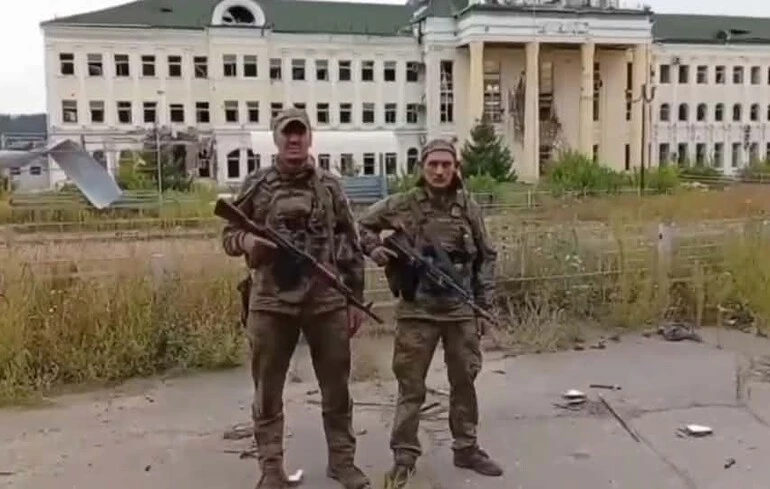
On September 19, 2026, Russia is holding sham elections to the State Duma in the occupied territories of the Kherson region, causing concern among the Ukrainian population and the international community. The occupiers are using manipulative tactics, such as staged polling stations and gifts for voters, to create the illusion of legitimacy for their actions.
This situation not only calls into question people’s right to freely express their will but also exposes the Kremlin’s strategies aimed at consolidating control over the occupied territories. What consequences might this have for the Kherson region and Ukraine as a whole, and how are world leaders responding?
Why has the Kremlin chosen Kherson for its manipulations?
The Kherson region has become an important target for the Kremlin due to its strategic location and historical ties to Russia. This region has significant economic potential, particularly through agriculture, which makes it crucial for controlling food supplies. In addition, Kherson is a key link in the supply chain from Crimea to mainland Ukraine.
Historically, the Kherson region has always had close ties to Russia. Following the annexation of Crimea in 2014, the Kremlin began actively extending its influence to this region, using a variety of tools, including the media, cultural projects, and social programs. The introduction of sham elections is part of a broader strategy aimed at legitimizing the occupation and creating the illusion of support among the local population.
What methods are used to manipulate voters?
To conduct sham elections, the Kremlin employs a wide range of manipulative tactics, including:
- Staged polling stations that create the appearance of a democratic process
- Bribing voters, including offering financial incentives or free goods
- Using local residents as “agents” to campaign for Russian candidates
- Control over the media landscape to shape a positive image of the occupying authorities
This approach allows the Kremlin to create the illusion of legitimacy and support, even though in reality the majority of the population remains dissatisfied with the situation. As analyst Oleksandr Kovalenko notes:
“The sham elections in Kherson are not just an attempt at manipulation, but a strategic move by the Kremlin to consolidate its control. They are trying to show that the local population supports their policies, even though this is far from the reality.”
📌 Read also:
What is the humanitarian situation in the occupied territories?
The sham elections in Kherson not only undermine democratic processes but also have a serious impact on the humanitarian situation in the occupied territories. Local residents face numerous challenges, including a lack of food, medical services, and social protections.
The humanitarian crisis is worsening due to constant shelling and the military presence, leading to a rise in the number of internally displaced persons and migrants. In the absence of normal living conditions and security, many people are forced to leave their homes, which further complicates the situation.
Furthermore, the occupying administration exploits humanitarian issues for political manipulation, distributing aid only to those who support its policies. This creates even greater social tension among the local population, which is already suffering from the consequences of the war.
Thus, the sham elections in Kherson are part of a broader Kremlin strategy that not only undermines democratic values but also exacerbates humanitarian crises, harming the lives of ordinary people. Against the backdrop of these events, it is important that the international community not stand idly by but actively respond to Russia’s attempts to legitimize its occupation.
What are the implications for human rights in the occupied territories?
The sham elections in the Kherson region, held under the control of Russian occupation forces, have serious consequences for human rights. In the absence of genuine political freedoms, the local population faces systematic violations of their fundamental rights. The occupation administration not only ignores international standards but also actively uses psychological and physical pressure on residents, forcing them to vote in these sham elections.
Local residents who attempt to express their dissent or refuse to support the occupation regime are subjected to persecution. According to human rights organizations, such actions include arrests, torture, and threats. The number of disappearances of individuals who were active opponents of the Russian occupation is rising.
The humanitarian situation in the Kherson region is also deteriorating. The occupying authorities control the delivery of humanitarian aid, attempting to use it as a tool for manipulation. Aid is provided only to those who demonstrate loyalty to the regime, which leads to even greater social tension among the population. The lack of access to medical care and food is making people’s lives unbearable.
“Elections under occupation are not only a violation of human rights but also an attempt to legitimize the annexation. This sets a dangerous precedent that could affect other regions where similar conflicts exist.”
Thus, the sham elections in Kherson not only demonstrate a lack of democracy but also undermine the foundations of the residents’ human rights, turning them into hostages of the Kremlin’s political games.
How is the international community reacting to these elections?
The international community is watching events in the Kherson region with great concern. European Union countries and the United States are actively condemning the sham elections, calling them illegitimate. Measures taken include, in particular, new sanctions against individuals involved in organizing the elections, as well as against companies that support the occupying regime.
In addition to sanctions, international organizations such as the UN and the OSCE are calling for monitoring of the human rights situation. However, the actual impact of these calls remains limited due to a lack of access to the territory and the Russian authorities’ unwillingness to cooperate with international institutions.
Another important aspect is the reaction of Ukraine’s neighboring countries. Poland and Lithuania have taken the lead in supporting Ukraine on the international stage, offering not only political but also military assistance. At the same time, some countries, particularly in Europe, are exercising caution in their response, fearing an escalation of the conflict.
🔎 Breaking News:
What are the possible scenarios for developments in the Kherson region in the near future?
Scenario 1: Continued occupation and humanitarian crisis
This scenario assumes that the occupying regime will continue to control the Kherson region, using sham elections as a tool to legitimize its authority. In this case, the humanitarian situation will deteriorate as resources remain limited and violence against the local population increases. The prospect of a return to normal life for residents will become extremely distant.
Scenario 2: Growing Resistance and International Support
In this scenario, resistance from the local population intensifies, which could lead to new waves of protests. The international community responds by increasing its support for Ukraine—both military and humanitarian—which could lead to a reduction in the influence of the occupying forces. However, this could also provoke an escalation of the conflict on Russia’s part.
Scenario 3: Negotiations and Compromises
This scenario envisages the possibility of peace negotiations, which could be initiated under pressure from the international community. In such a case, options for decentralizing power or granting special status to the Kherson region could be considered. However, reaching a compromise seems unlikely given the current political conditions.
Given these scenarios, it is clear that the situation in the Kherson region will remain tense, and human rights will remain under threat. Uncertainty and tension may persist unless the international community takes decisive action to support Ukraine.
As a result, the Kherson region is becoming not only a theater of military operations but also a symbol of the struggle for human rights. The situation in the region demands an active response not only from Ukraine but also from the international community, as the consequences of inaction could be catastrophic not only for the local population but also for stability in Europe as a whole.